AITA for telling my best friend her chipped tooth is noticeable and she should fix it ASAP?
Oh, the delicate dance of friendship! We've all been there, caught between wanting to be honest with a loved one and fearing that honesty might sting. Today's AITA story throws us right into that dilemma, centering on a seemingly small issue with potentially big emotional consequences. Is it always best to tell your friend the 'truth,' even if it's about a physical imperfection?
Our original poster, let's call them OP, thought they were doing their best friend a favor by pointing out something that might be perceived as a flaw. But as many of us know, unsolicited advice, especially regarding appearance, can be a minefield. Was OP truly helping, or did they inadvertently cross a line and cause unnecessary hurt? Let's dive into the details.

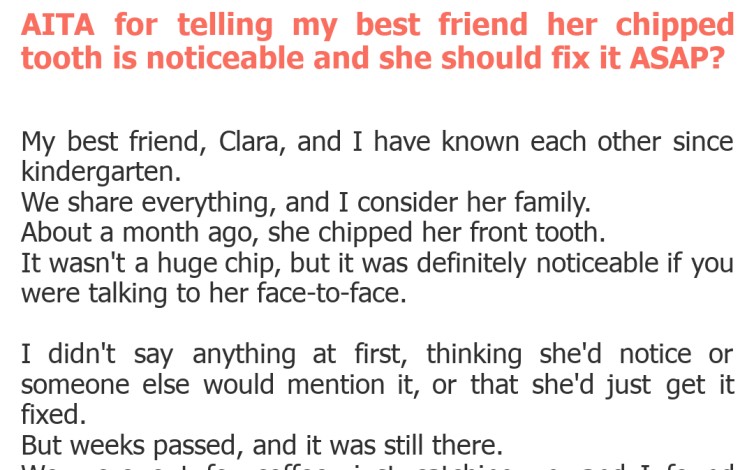
"AITA for telling my best friend her chipped tooth is noticeable and she should fix it ASAP?"
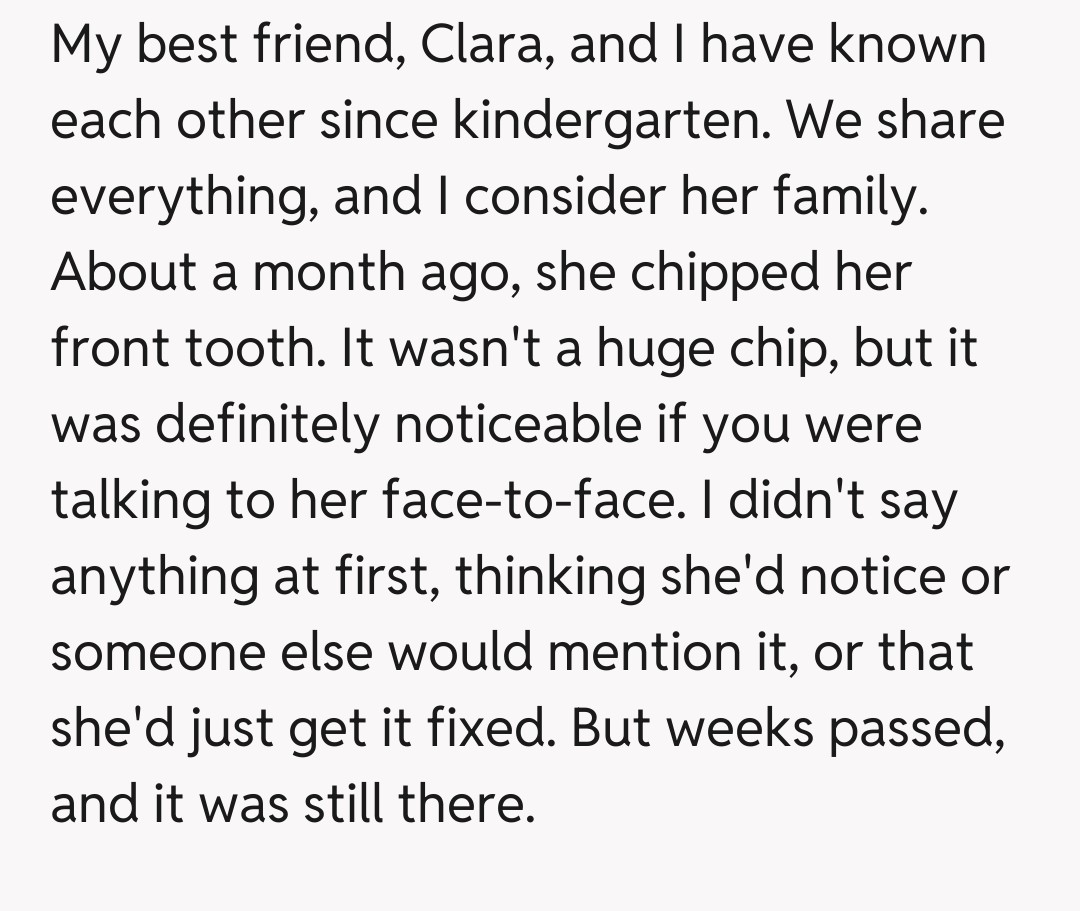
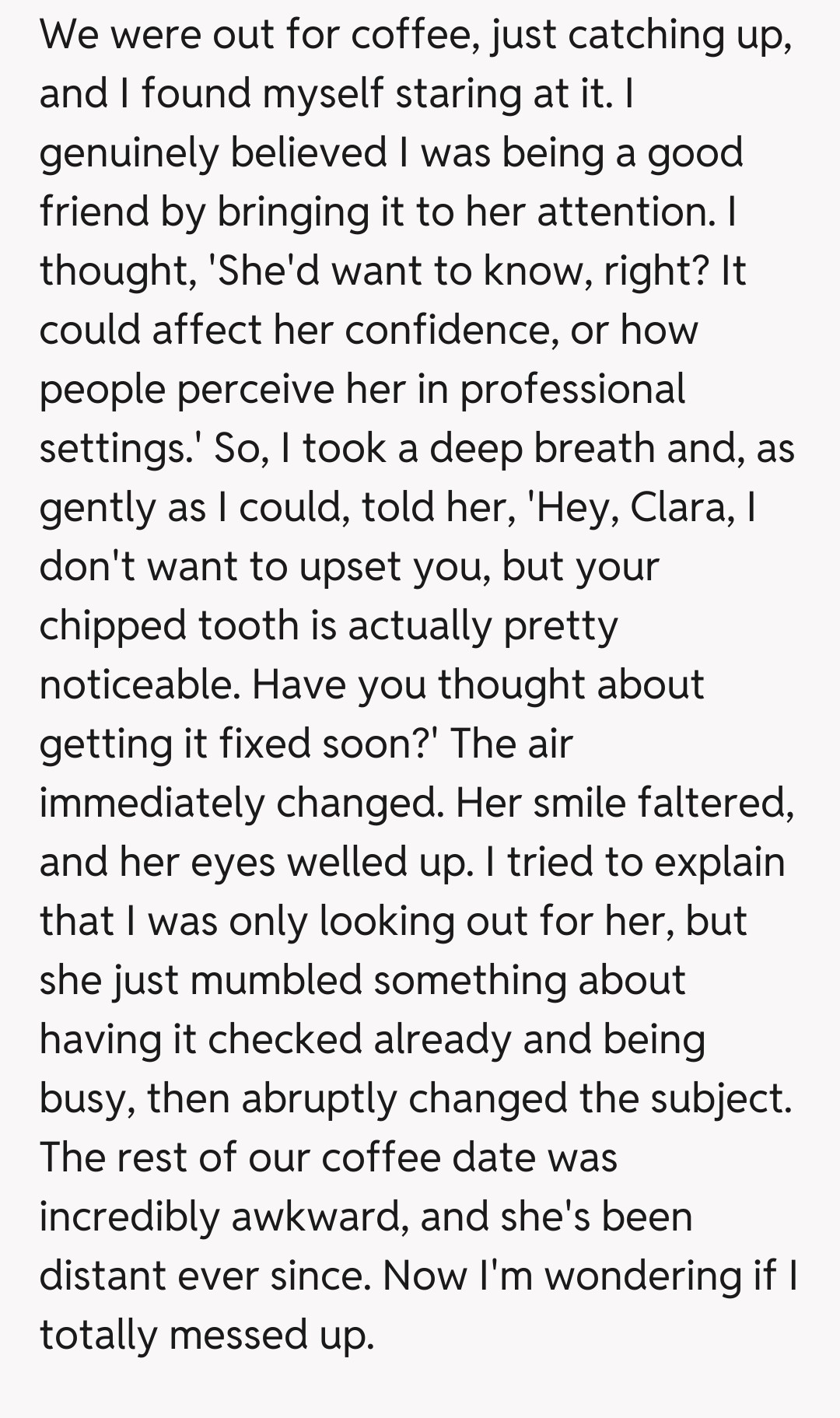
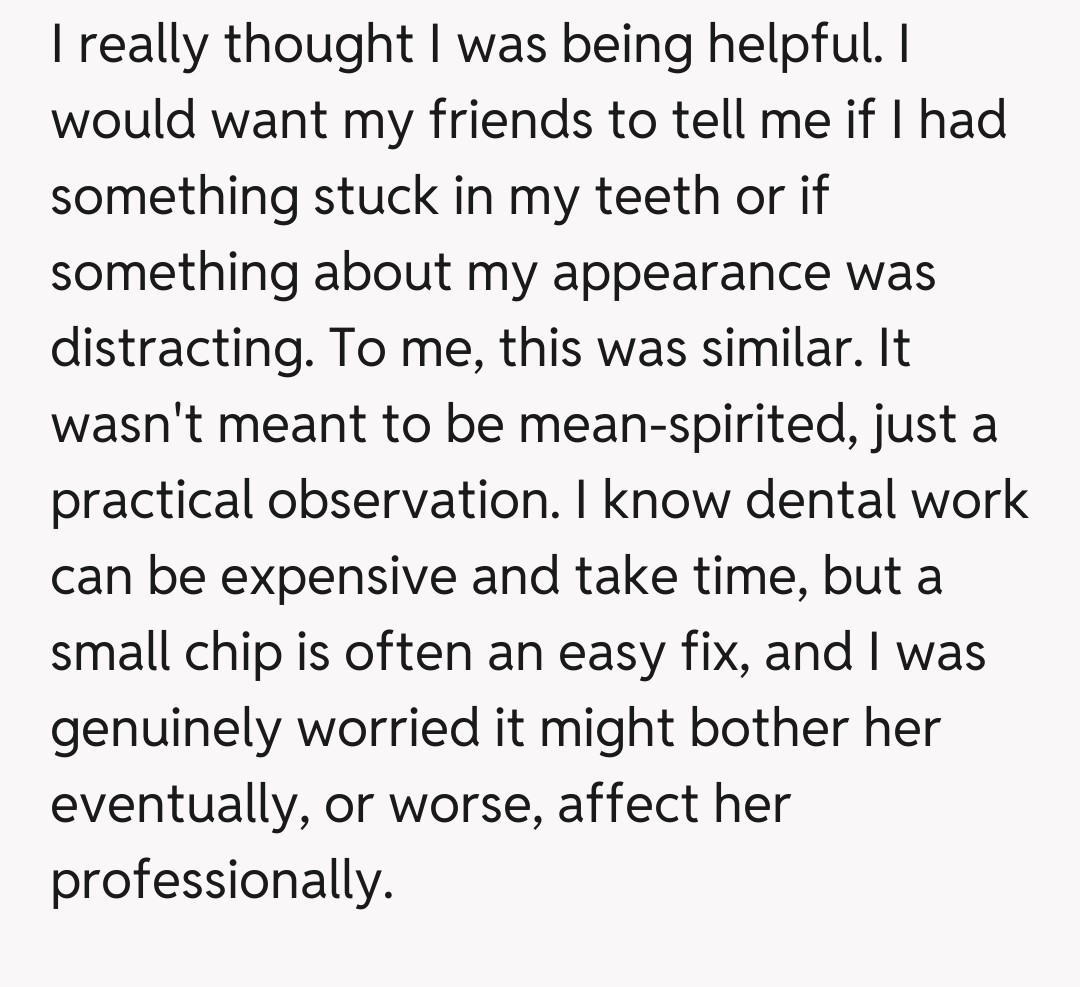
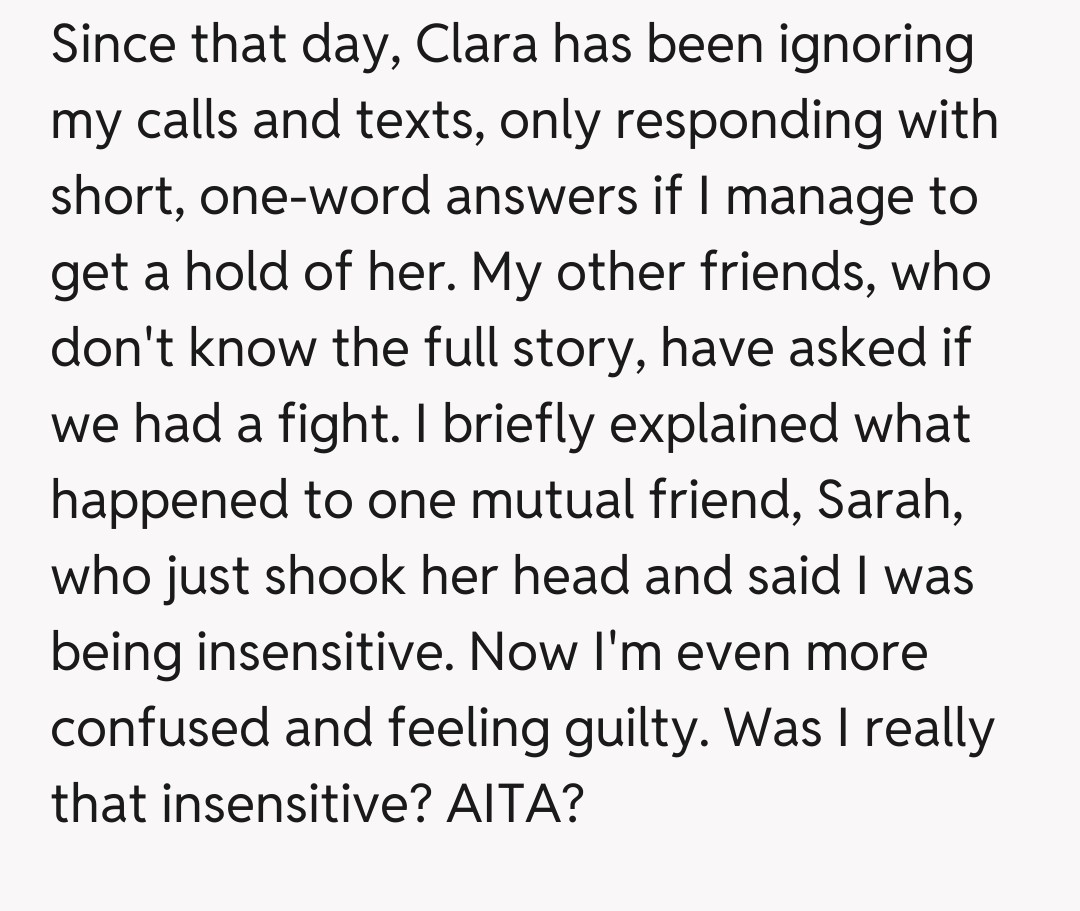
This situation highlights a classic dilemma in close friendships: the boundary between helpful honesty and hurtful criticism. OP's intentions, at face value, seem benign. They genuinely believed they were looking out for Clara's best interests, drawing a parallel to pointing out spinach in teeth. From OP's perspective, this was a practical matter, not a personal attack, and good friends offer this kind of candid feedback.
However, the impact of such a comment often outweighs the intention. A chipped tooth, while potentially fixable, is part of one's physical appearance. Comments on appearance, even if framed as 'helpful,' can easily be perceived as critical or shaming. Clara's reaction – her smile faltering, eyes welling up, and subsequent distancing – clearly indicates she felt hurt, not helped.
One key factor to consider is whether Clara had already acknowledged or was actively addressing the issue. Her comment about 'having it checked already' suggests she was aware, and perhaps, already feeling self-conscious or stressed about it. In such cases, bringing it up again, especially in a way that implies it's a glaring problem, only adds to that burden and makes her feel judged rather than supported.
Furthermore, the delivery matters immensely. While OP tried to be gentle, the directness of the statement, focusing on the 'noticeable' aspect and the urgency of 'ASAP,' might have been too blunt. Sometimes, the kindest approach is to offer support without pointing out the 'flaw,' allowing the friend to bring it up if they wish, or to simply let it be if it's not truly harming them.
The internet weighs in: Honesty vs. Sensitivity!
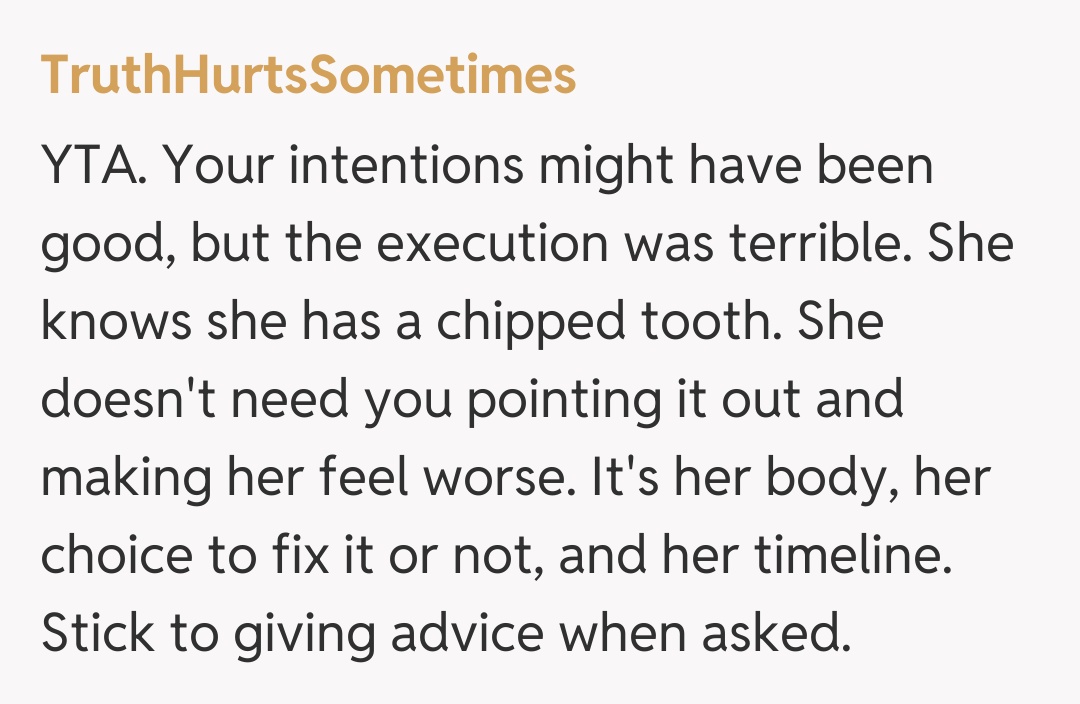
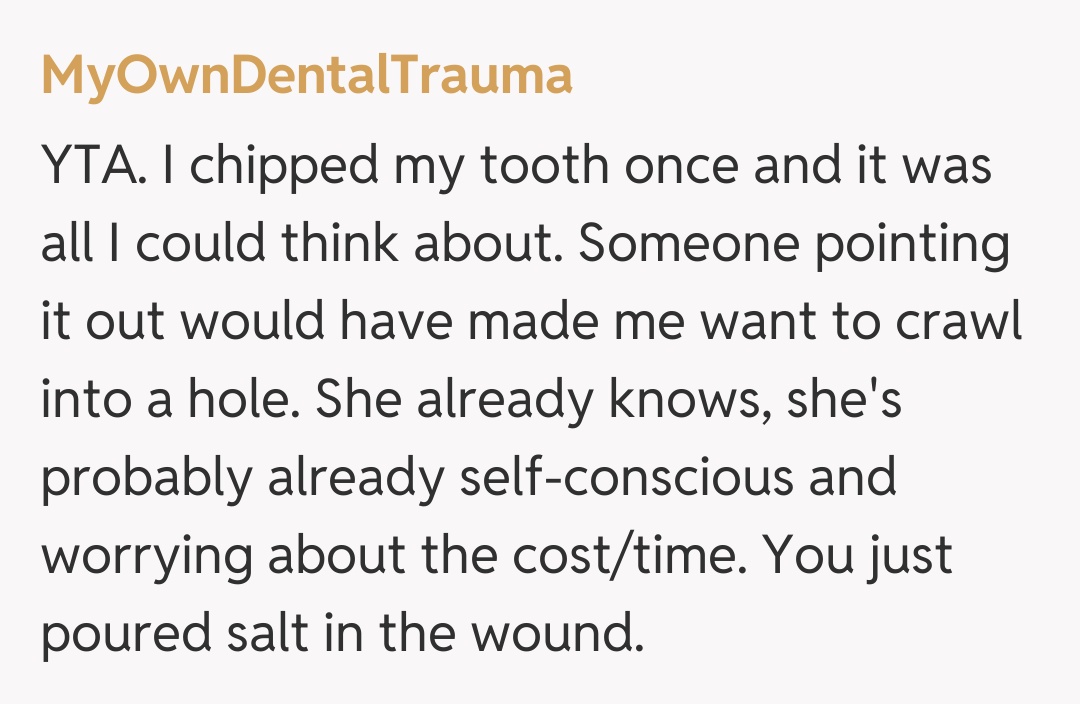
The comments section for this story was, as expected, a lively debate! Many users leaned towards 'YTA,' emphasizing that commenting on someone's physical appearance, even a chipped tooth, is often a no-go. The general consensus among these commenters was that if it's not something easily fixed in the moment (like food in teeth), it's best left unsaid unless the friend brings it up first.
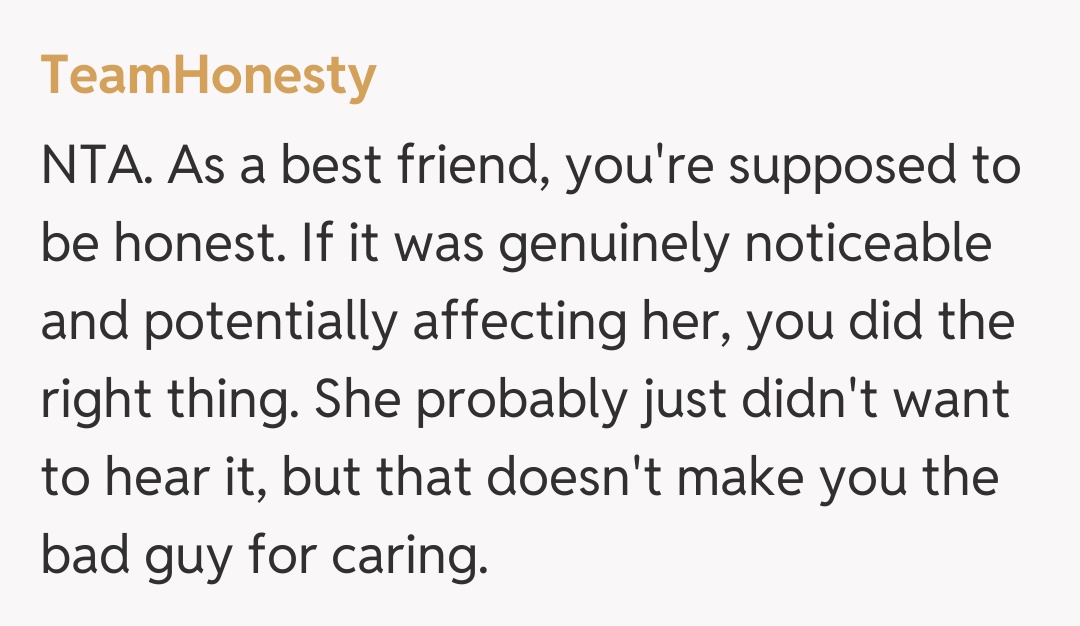
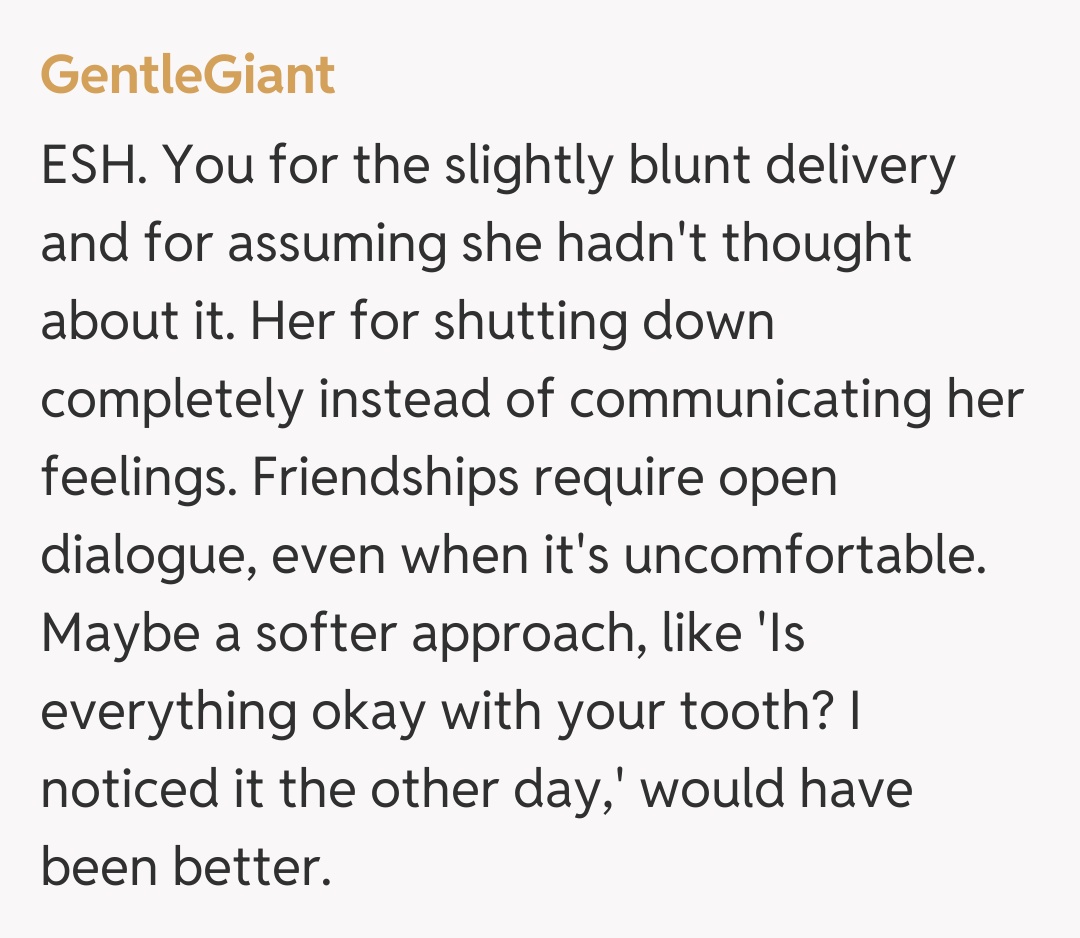
However, a significant number of people also offered a 'NTA' or 'ESH' verdict, arguing that a true best friend should be able to have these difficult conversations. They highlighted OP's good intentions and the potential professional implications of a noticeable chipped tooth, suggesting that Clara's reaction might have been an overreaction or that she was already sensitive about the issue.
This AITA story serves as a powerful reminder that communication, even with our closest friends, is a delicate art. While honesty is a cornerstone of any strong friendship, it must always be balanced with empathy and careful consideration of the other person's feelings and circumstances. Sometimes, the kindest thing we can do is offer unspoken support rather than unsolicited advice, especially when it concerns sensitive topics like appearance. Learning when to speak and when to simply listen is a lifelong lesson, and one that OP and Clara are now learning the hard way.