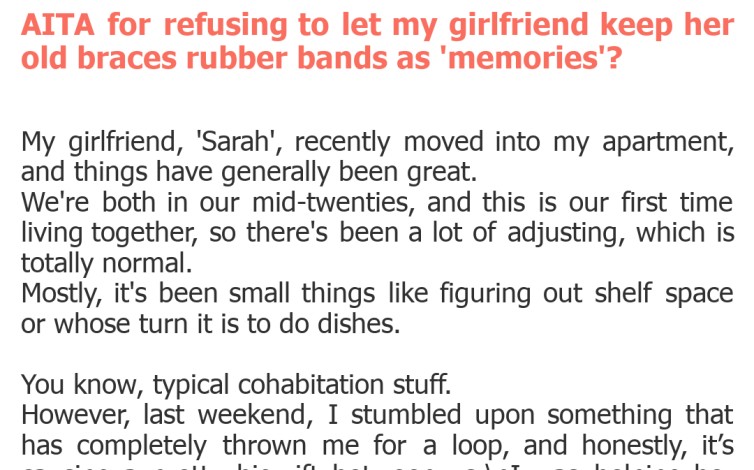
AITA for refusing to let my girlfriend keep her old braces rubber bands as ‘memories’?
Oh, dear readers, do we have a doozy for you today! Our latest AITA submission dives deep into the murky waters of personal sentimentality versus, well, sheer hygiene. Imagine finding a collection of something you consider trash, only to learn your significant other views it as a cherished memento. It's a clash of perspectives that's both bizarre and surprisingly relatable, hitting on core issues of respect and boundaries within a relationship.\nThis week's OP is grappling with a situation that might make some of you gag, while others might nod in understanding. It's about 'memories' and the physical forms they sometimes take – forms that aren't always pleasant or even sensible to an outside observer. Let's dive into the peculiar world of dental detritus and relationship drama, and see if our OP is truly the a**hole for drawing a line in the sand, or rather, on the shelf.

"AITA for refusing to let my girlfriend keep her old braces rubber bands as 'memories'?"
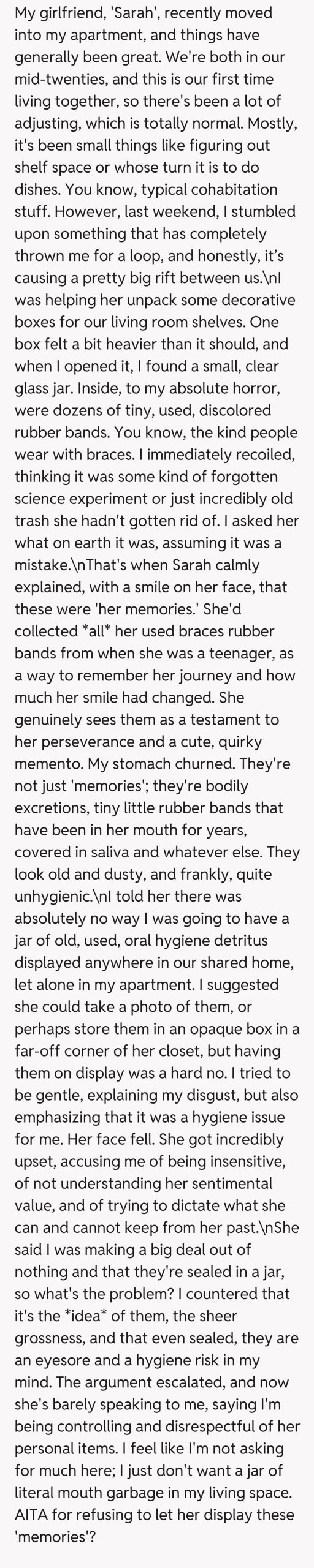
This is one of those wonderfully peculiar AITA scenarios that highlights the vast differences in how people perceive objects and their sentimental value. On one hand, we have OP, clearly focused on the practical, hygienic, and aesthetic aspects of their shared living space. A jar of used dental materials, regardless of its sealed state, understandably triggers a visceral reaction for many, evoking feelings of disgust and an aversion to what is perceived as unhygienic.\nThe girlfriend, Sarah, however, sees these rubber bands through an entirely different lens. For her, they are not merely 'mouth garbage' but tangible symbols of a personal journey, a reminder of overcoming a challenge and achieving a desired outcome – a new smile. This kind of sentimental attachment to unusual items is not uncommon; people collect all sorts of things that hold deep personal meaning, even if others find them odd or unattractive.\nThe core conflict here isn't just about the rubber bands themselves, but about boundaries, respect, and compromise in a shared living situation. OP feels their boundaries regarding hygiene and aesthetics are being violated, while Sarah feels her emotional connection and personal choices are being disrespected. Both perspectives have a degree of validity when considered in isolation, making this a classic conflict where neither person is entirely wrong or right.\nUltimately, living together requires a delicate balance of individual desires and mutual consideration. While Sarah has every right to her memories, OP also has a right to feel comfortable and un-grossed-out in their own home. The challenge lies in finding a solution that respects both parties' needs without forcing one to entirely abandon their feelings or cherished items. It's a tricky tightrope walk, to be sure.
The Verdict is In: Is Oral History Always Gross?
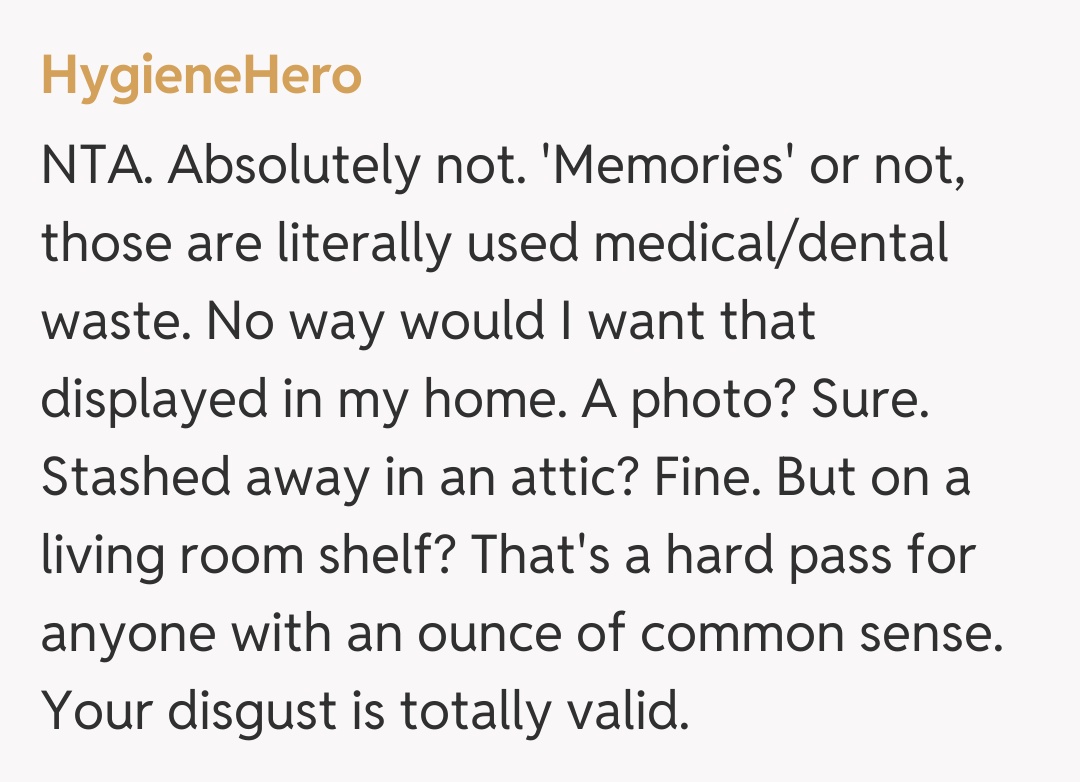
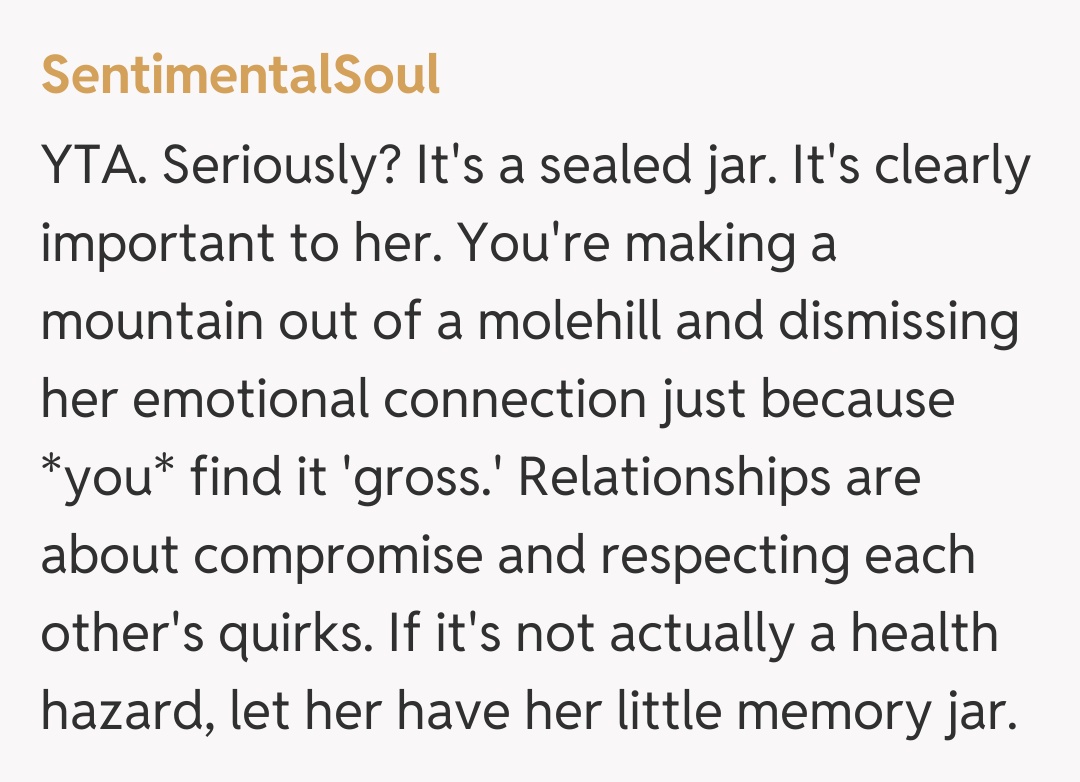
Well, folks, the comments section for this one was a vibrant mix of 'ewww, NTA!' and 'her memories, YTA!'. Many readers sided strongly with OP, expressing their own disgust at the idea of old dental bands being kept, let alone displayed. The general consensus among this group was that while sentimentality is fine, there are limits, especially when it borders on being unhygienic or visually unappealing in a shared space. Users repeatedly cited the 'ick' factor and the bodily fluid aspect.\nHowever, a significant number of commenters also empathized with Sarah, highlighting that what one person finds gross, another finds meaningful. They argued that if the jar is sealed, the hygiene argument is overblown, and that OP is being controlling by dictating what 'memories' Sarah can keep. Some suggested a compromise, like keeping them in a private drawer or an opaque container, acknowledging both the sentiment and the shared space. It really brought out the 'different strokes for different folks' argument!
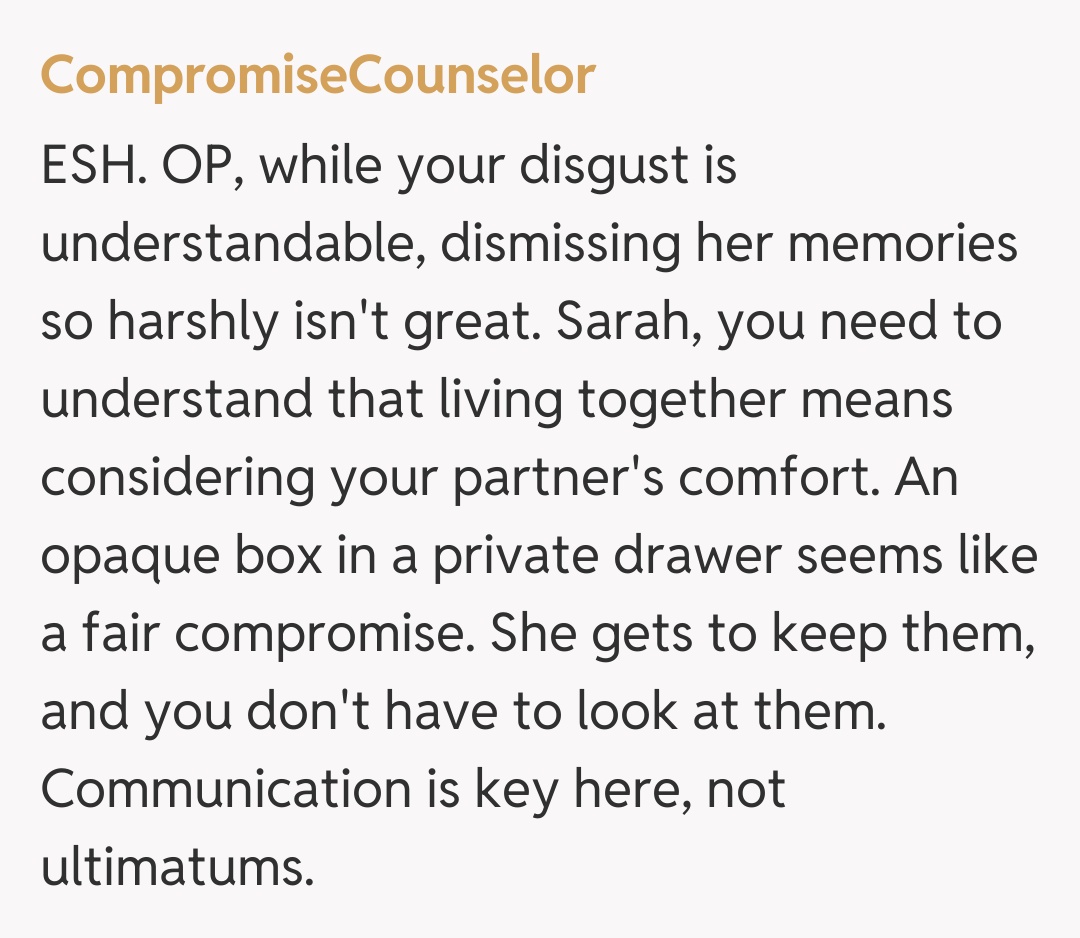

So, what's the takeaway from this rubber band rumble? It's a stark reminder that even the smallest, most seemingly insignificant items can hold immense personal meaning, and conversely, trigger intense reactions in others. The key to navigating such peculiar predicaments in a shared life is open communication, a willingness to understand differing perspectives, and a healthy dose of compromise. Sometimes, the best solution isn't about right or wrong, but about finding a space where both partners feel respected and comfortable, even if that means tucking 'memories' away where they're only cherished by one. What would *you* do?