AITA for telling my girlfriend her birthmark on her neck looks like a bruise and she should cover it?
Oh boy, do we have a doozy today! Navigating the delicate dance of relationships means sometimes even well-intentioned words can land with the impact of a wrecking ball. Our latest AITA submission dives headfirst into this tricky territory, proving that what one person sees as helpful, another might interpret as deeply wounding. It's a classic case of perception versus intention, and frankly, a minefield for anyone in a romantic partnership.
Body image and self-acceptance are incredibly personal journeys, and it's rare for anyone to escape them unscathed. When a partner, someone who is supposed to be your biggest cheerleader, offers unsolicited advice about your appearance, it can cut deeper than comments from strangers. Today's OP learned this the hard way, sparking a debate that touches on sensitivity, communication, and the often-invisible lines we draw around our own bodies.

"AITA for telling my girlfriend her birthmark on her neck looks like a bruise and she should cover it?"
This story is a textbook example of good intentions paving the road to hurt feelings. On one hand, OP claims he was genuinely concerned about how Sarah's birthmark might be perceived by others, specifically fearing it could be mistaken for a bruise and potentially reflect poorly on him or imply domestic abuse. This protective instinct, while misguided in its execution, isn't inherently malicious. It speaks to a level of social awareness, albeit a somewhat misplaced one.
However, the impact of his words on Sarah is undeniable and takes precedence. Her birthmark is an immutable part of her identity, something she has clearly accepted and embraced. For her partner to suddenly suggest she cover it implies that this part of her is undesirable, shameful, or in need of concealment. This can be incredibly damaging to one's self-esteem and the feeling of being loved unconditionally for who you are.
The phrasing "looks like a bruise" and "should cover it" also carries a heavy implication. It wasn't framed as a question or an offer of help, but rather a direct instruction or judgment. Even if OP's concern was truly about public perception, he failed to consider how his comment would land on the person he supposedly loves. There's a vast difference between concern and control, and this leans uncomfortably towards the latter.
Ultimately, relationships thrive on open, sensitive communication and unconditional acceptance. While OP might have meant well, his comment was tone-deaf and prioritized hypothetical external judgment over his girlfriend's comfort and self-worth. It demonstrates a lack of empathy for her lived experience with her birthmark and a failure to consider the emotional weight such a suggestion carries. A sincere apology and a deeper understanding of her feelings are definitely in order.
The internet weighs in: Was OP clueless or just caring?
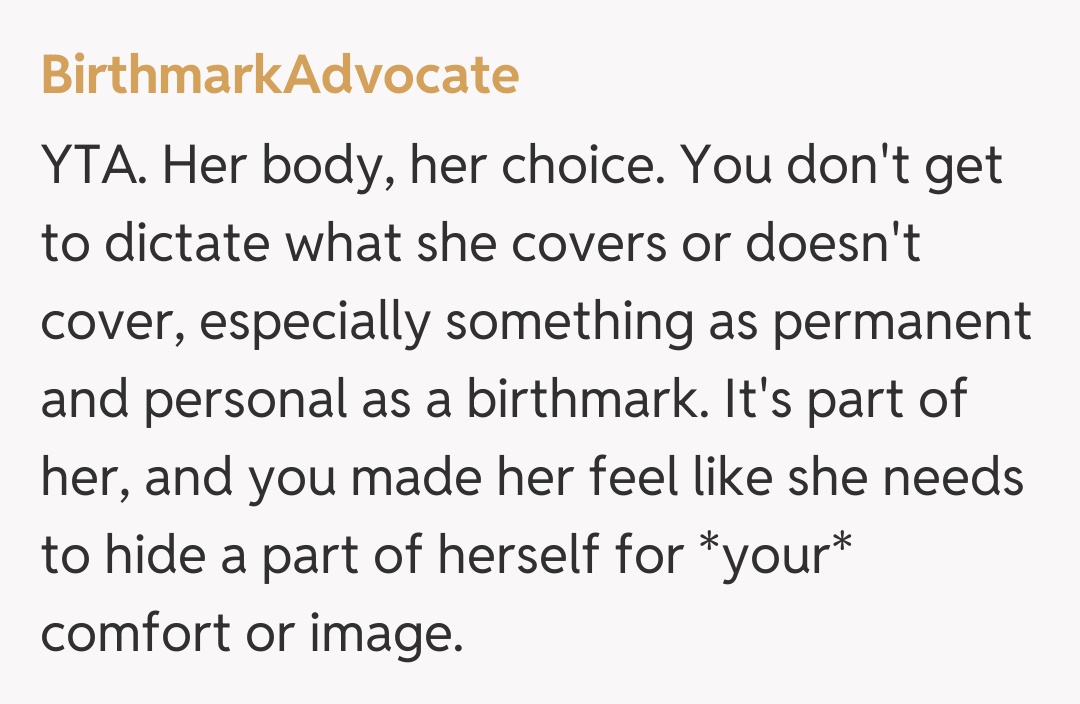
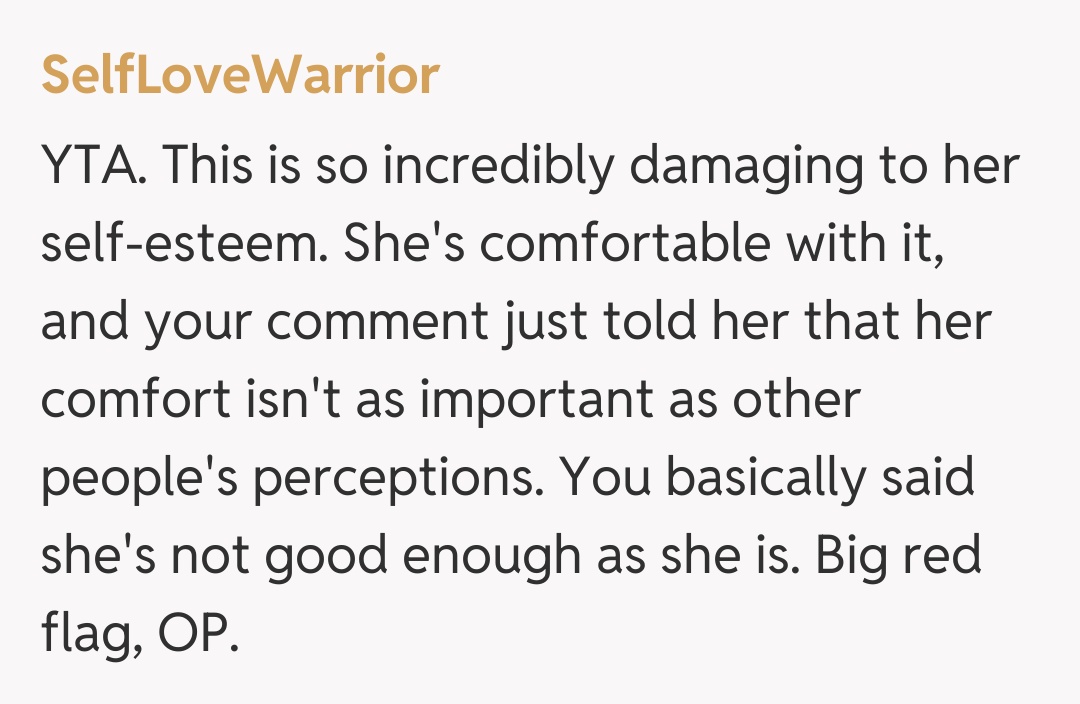
The comment section for this post was, as expected, a lively debate. Many readers immediately jumped to Sarah's defense, highlighting the immense emotional damage that unsolicited comments about one's physical appearance can inflict, especially from a partner. The general consensus leaning towards YTA revolved around the idea that Sarah's body is her own, and a birthmark is not something that needs 'fixing' or 'covering' to make others comfortable.
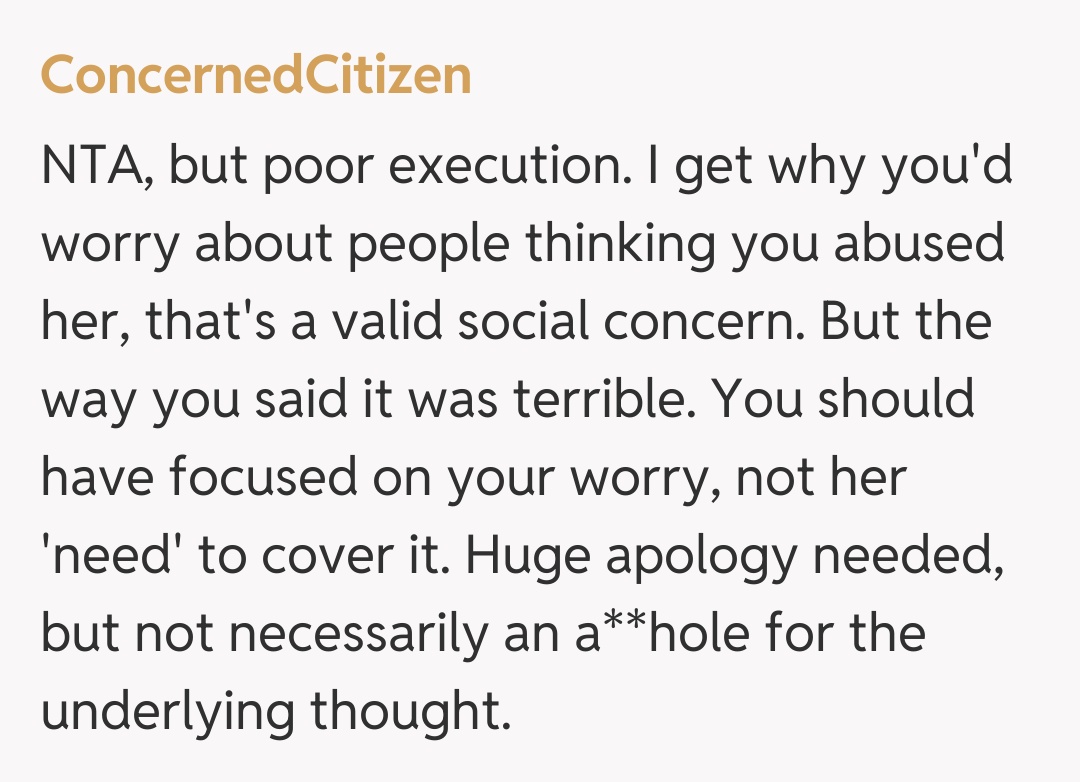
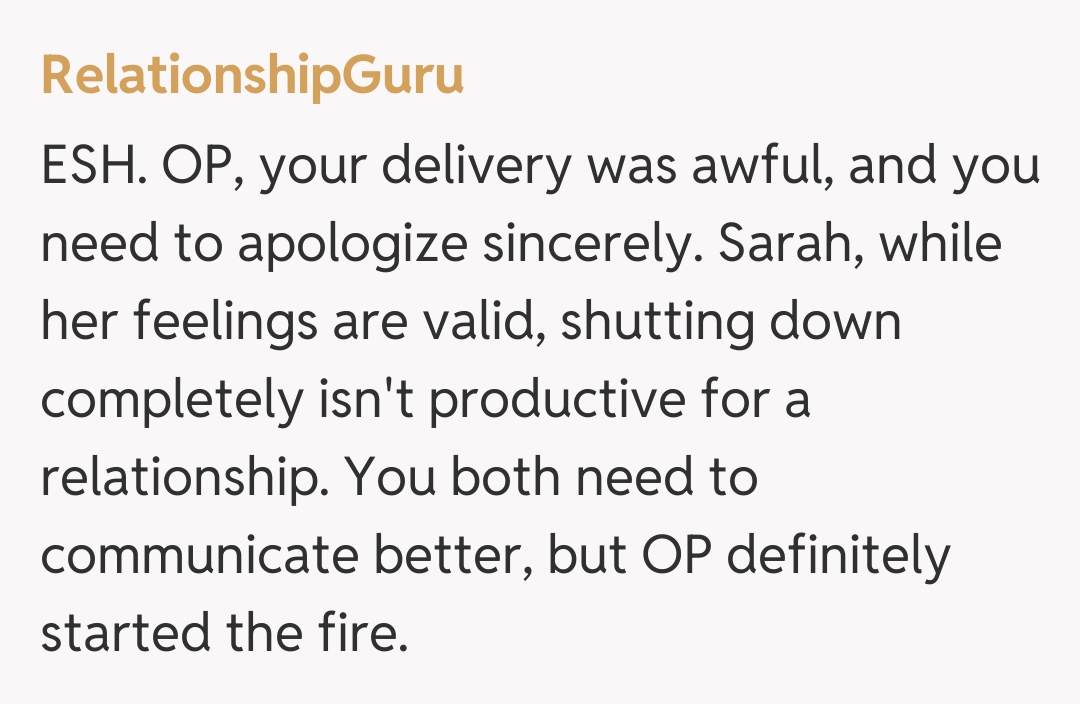
Conversely, a smaller but vocal contingent acknowledged OP's stated intention, arguing that if he genuinely feared misinterpretation (i.e., people thinking he caused a bruise), his concern wasn't entirely unwarranted, though his delivery was undoubtedly terrible. These commenters suggested he might be NTA for the thought, but a massive YTA for the execution. It truly shows how complex intentions can become when faced with personal sensitivities.
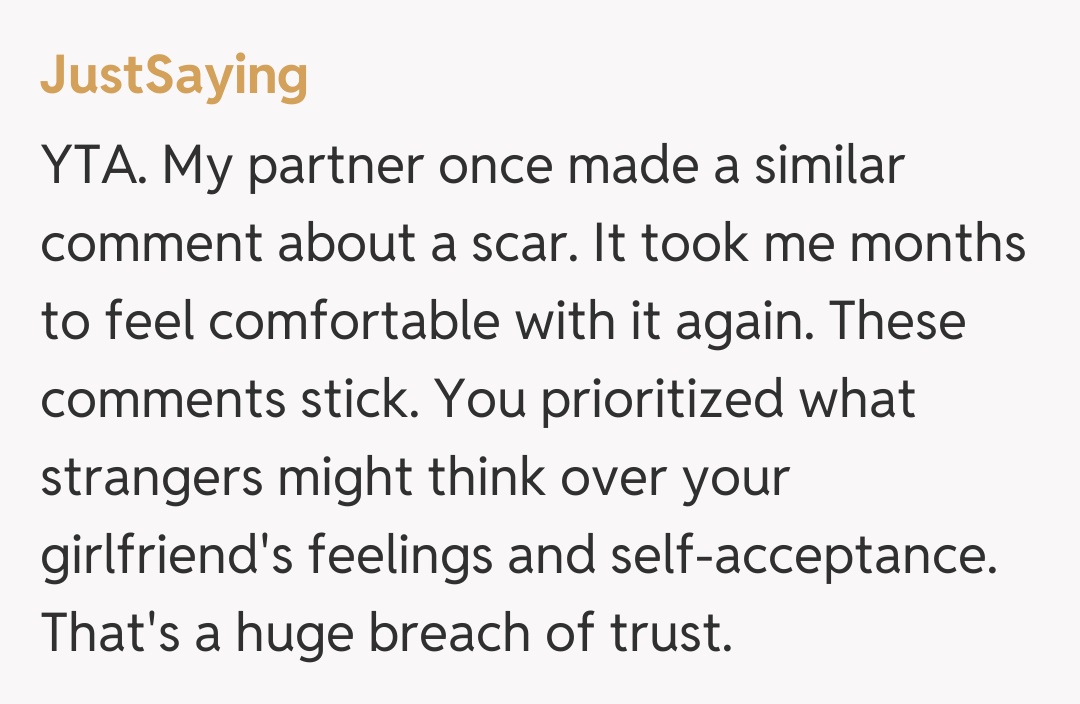
This incident serves as a powerful reminder that while our intentions may be pure, the impact of our words can sometimes sting far more than we anticipate. For OP, a sincere, heartfelt apology that focuses on Sarah's feelings, not his intentions, is the crucial next step. More importantly, this situation opens a door for deeper conversation about body image, self-acceptance, and how partners can best support each other without causing inadvertent harm. Relationships are built on trust and affirmation, and sometimes, the best thing to say is nothing at all, or simply, 'You look beautiful.'