AITA for refusing to let my husband adopt my daughter because “she’ll never see him as her real dad”?
Oh, family dynamics, always a tightrope walk! Today we're diving into a deeply personal AITA query that touches on love, loss, and the complex journey of blended families. Our original poster, a mom, is grappling with a difficult decision that pits her husband's desire to legally adopt her daughter against her own protective instincts and fears about her daughter's perception.
This isn't just about legal paperwork; it's about emotional connections, identity, and the delicate balance of creating a new family while honoring the past. The phrase "she'll never see him as her real dad" is a loaded one, and it's sparking a lot of debate online. Let's unpack the story and see if we can navigate this sensitive terrain together.

"AITA for refusing to let my husband adopt my daughter because “she’ll never see him as her real dad”?"
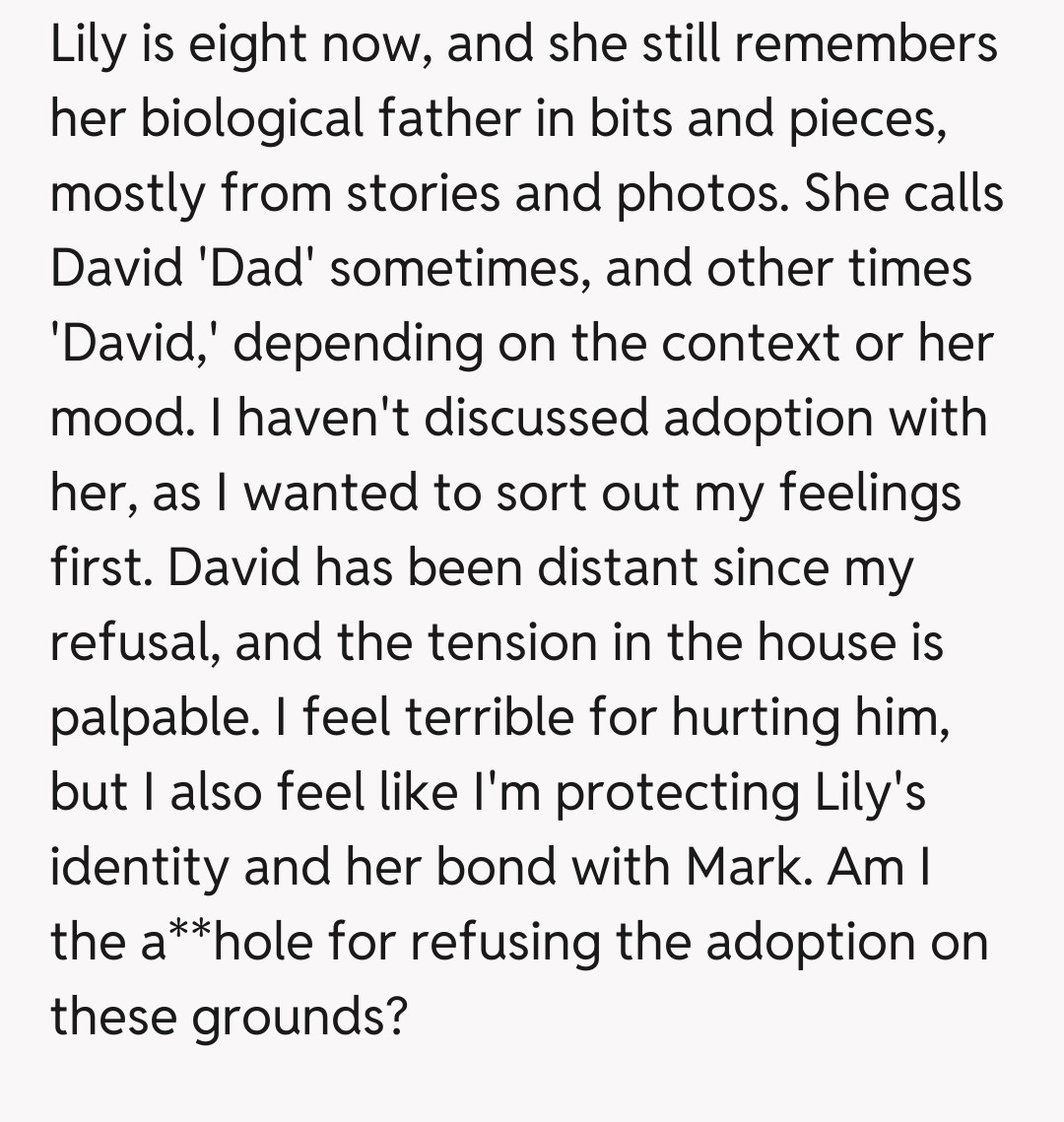
This AITA post presents a truly heartbreaking dilemma, where no one is truly wrong, yet everyone is feeling pain. The OP's resistance stems from a place of love and loyalty to her late husband, Mark. It's completely understandable to want to preserve the memory and identity of her daughter's biological father, especially since he passed away. Her fear that adoption would somehow diminish Lily's connection to Mark is a valid emotional response.
On the other hand, David's desire to adopt Lily also comes from a place of deep love and commitment. He sees himself as Lily's father in every way that matters, and he wants the legal status to reflect that reality. For many step-parents, adoption is the ultimate expression of their dedication, not just emotionally but practically. It provides a sense of permanence and belonging for all members of the blended family.
Lily's perspective, though not fully explored yet, is paramount here. At eight years old, she's old enough to have feelings and opinions about her family structure. While the OP hasn't discussed it with her, Lily's acceptance and understanding of the situation are crucial. Adoption can be a beautiful way to formalize a bond, but it shouldn't erase her past. The question isn't whether she'll see David as her 'real' dad, but how *she* defines her family and her relationships.
The core of the conflict lies in the definition of 'real dad' and the different ways people express love and commitment. The OP views 'real' as biological and enduring; David views it as active, present, and legally recognized. Neither view is inherently incorrect, but they are clashing here. Communication, perhaps with family counseling, could help bridge this gap and explore what adoption truly means for everyone involved, especially for Lily.
The internet weighs in: Is 'real dad' a biological bond or earned through love?
The comments section on this post was, as expected, a rollercoaster of emotions and strong opinions. Many users empathized deeply with the OP's grief and her desire to honor Mark's memory, understanding her hesitation. They argued that a legal document doesn't change a child's inherent understanding of their biological roots and that forcing the issue could create confusion for Lily.
However, a significant portion of commenters sided with David, emphasizing that a 'real' dad is one who shows up, provides, and loves unconditionally, regardless of biology. They pointed out the practical benefits of adoption and suggested that the OP's focus on 'real' might be inadvertently hurting David and potentially even Lily in the long run. The consensus leaned towards open communication with Lily.
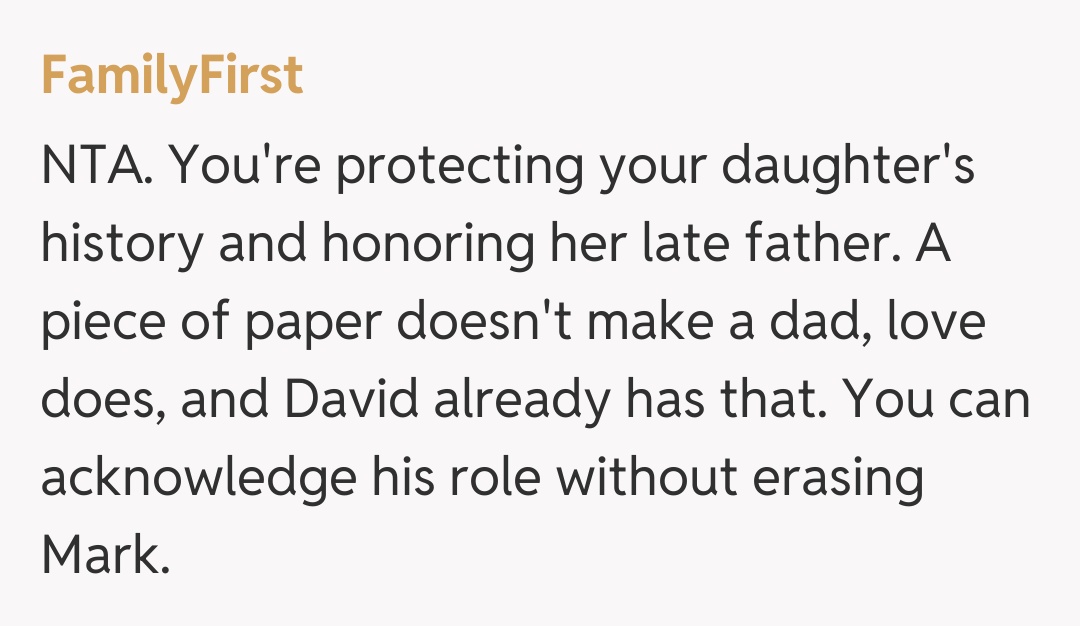
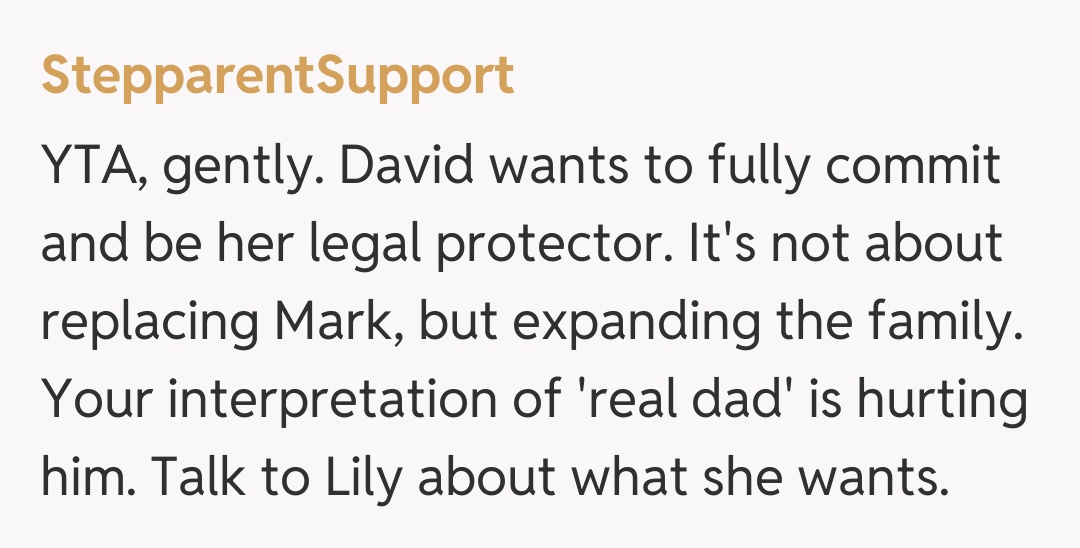
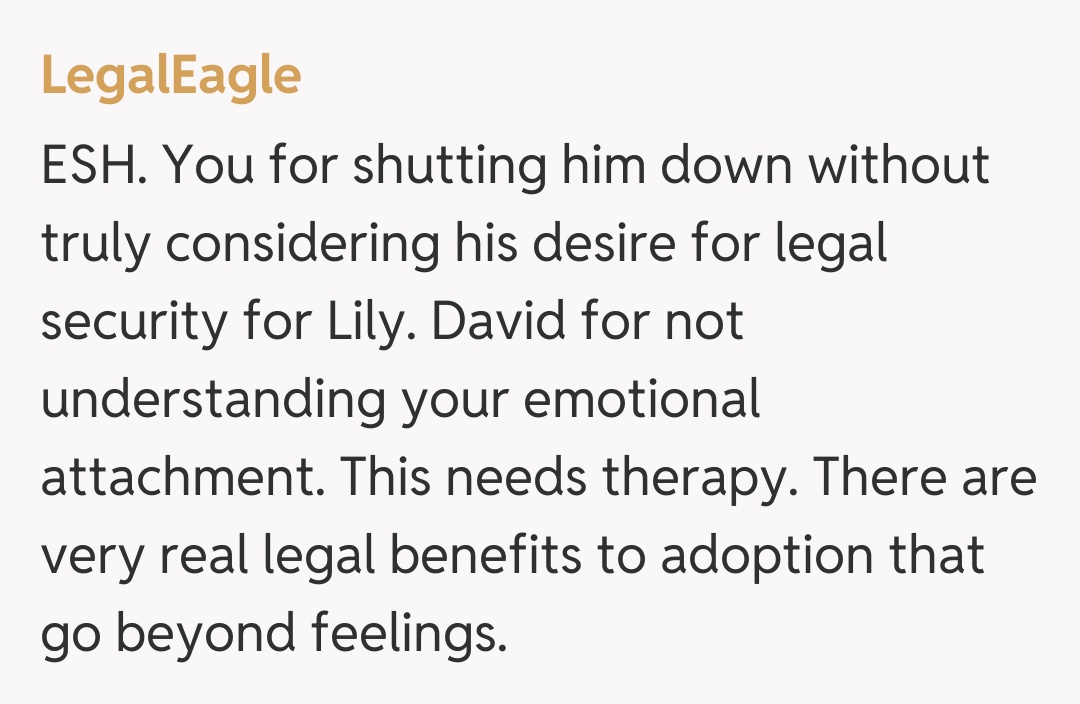
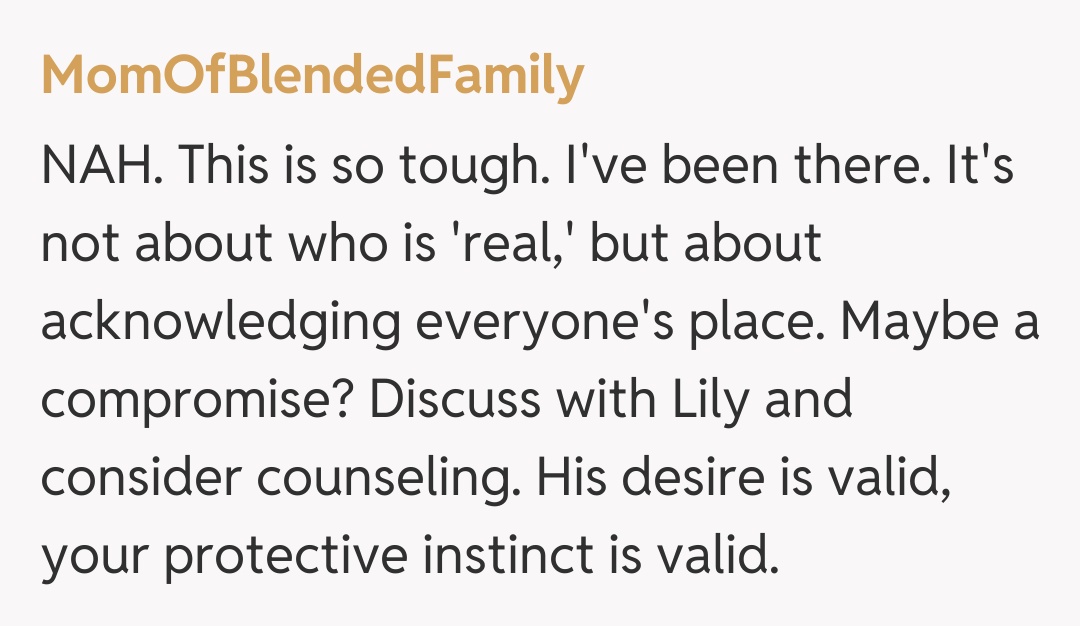
This AITA post truly encapsulates the delicate balance in blended families. There's no clear villain, only individuals navigating love, loss, and the desire for belonging. The overarching advice seems to be a crucial conversation with Lily, respecting her feelings, and potentially seeking family counseling to process these complex emotions. Ultimately, the goal should be to create a loving, secure environment for Lily where all her relationships are honored, and she feels understood. Legalities aside, love and open communication are always the strongest foundations.