AITA for telling my girlfriend she can’t get a Brazilian wax anymore because “it feels like it’s for other men”?
Welcome back, dear readers, to another installment of relationship dilemmas that make us all collectively cringe and ponder the delicate balance of partnership. Today's story touches on a particularly sensitive area: personal grooming choices and how they intersect with a partner's feelings of insecurity. It's a classic AITA setup, where individual autonomy clashes with perceived relational expectations.
This week, we're diving into a situation where a partner's preference for a certain appearance decision becomes a point of contention, leading to an ultimatum. The underlying themes are universal – trust, self-esteem, and the sometimes blurry lines of what's 'ours' and what's 'mine' in a committed relationship. Let's get into the nitty-gritty of this potentially explosive topic.

"AITA for telling my girlfriend she can’t get a Brazilian wax anymore because “it feels like it’s for other men”?"
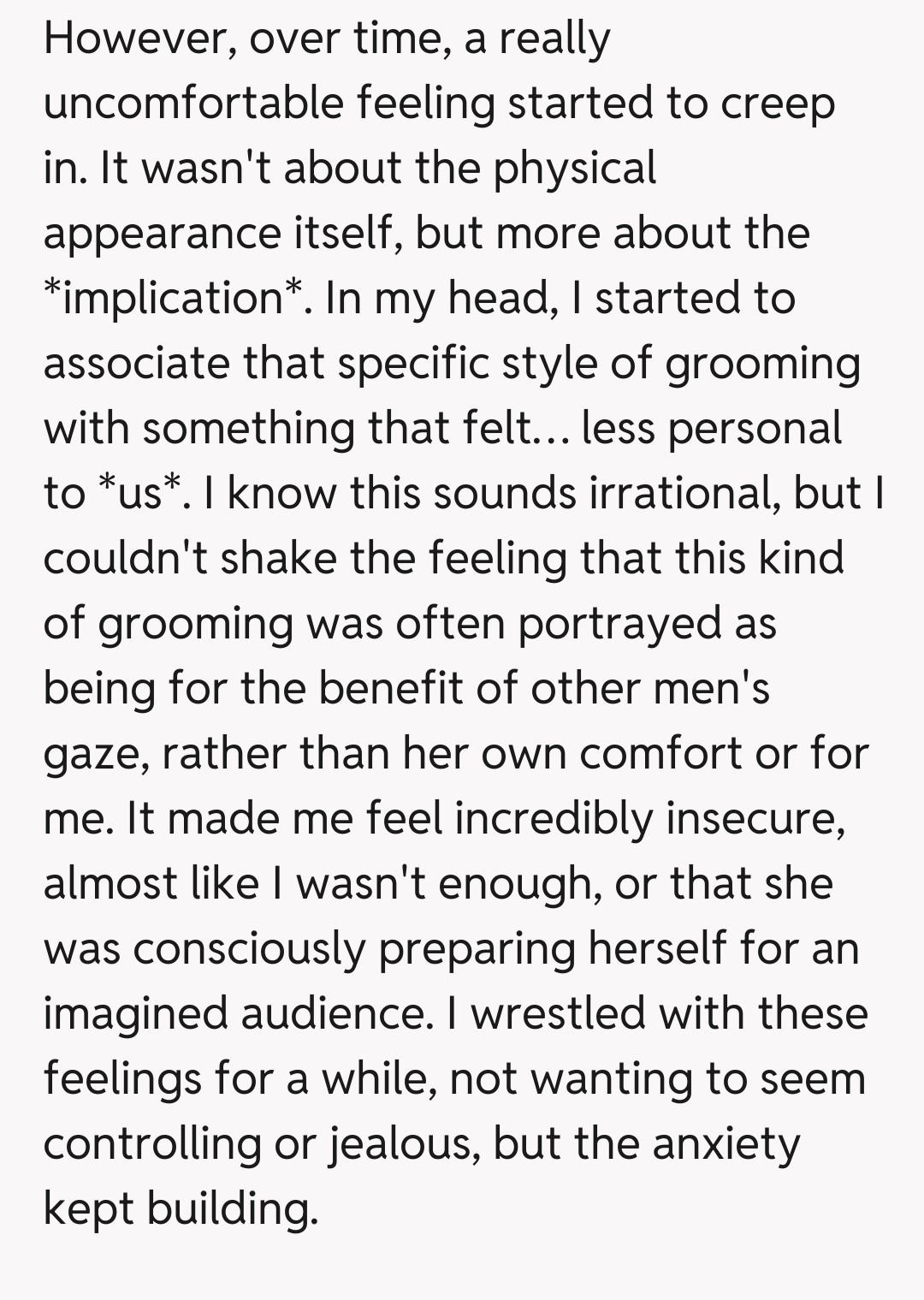
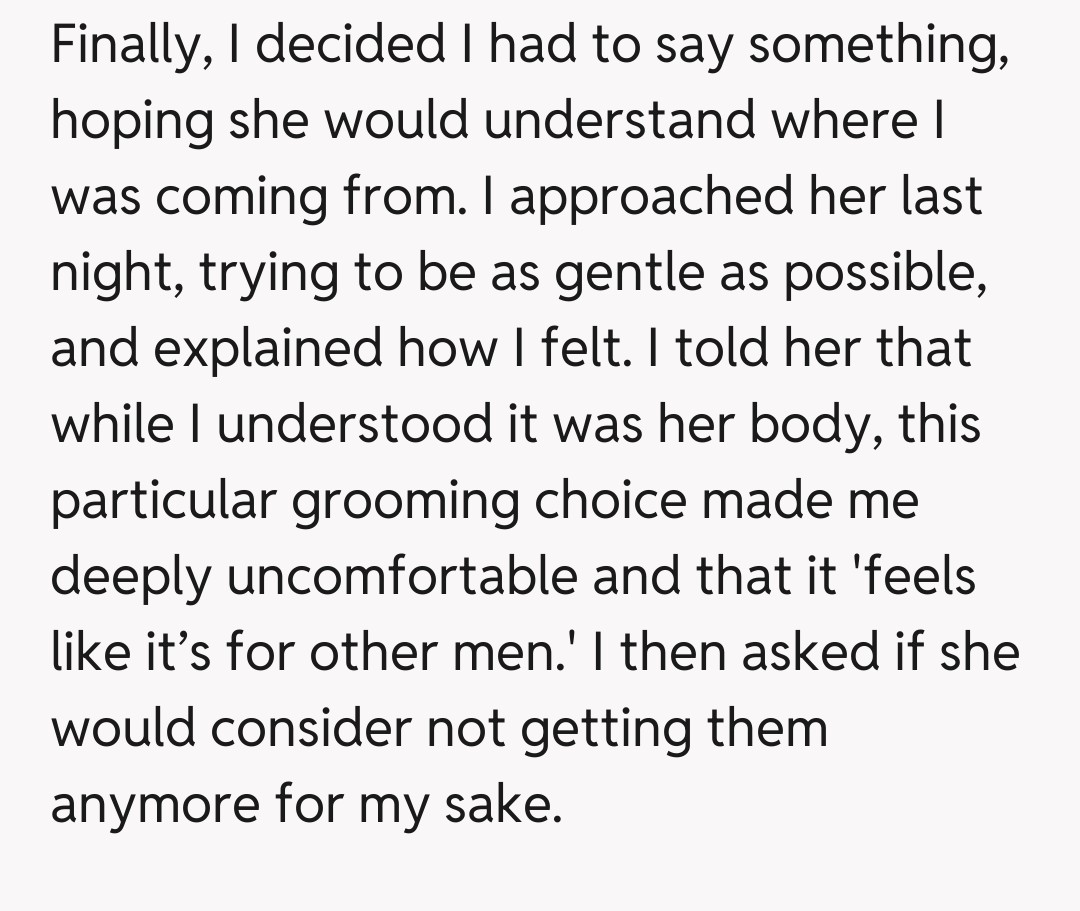
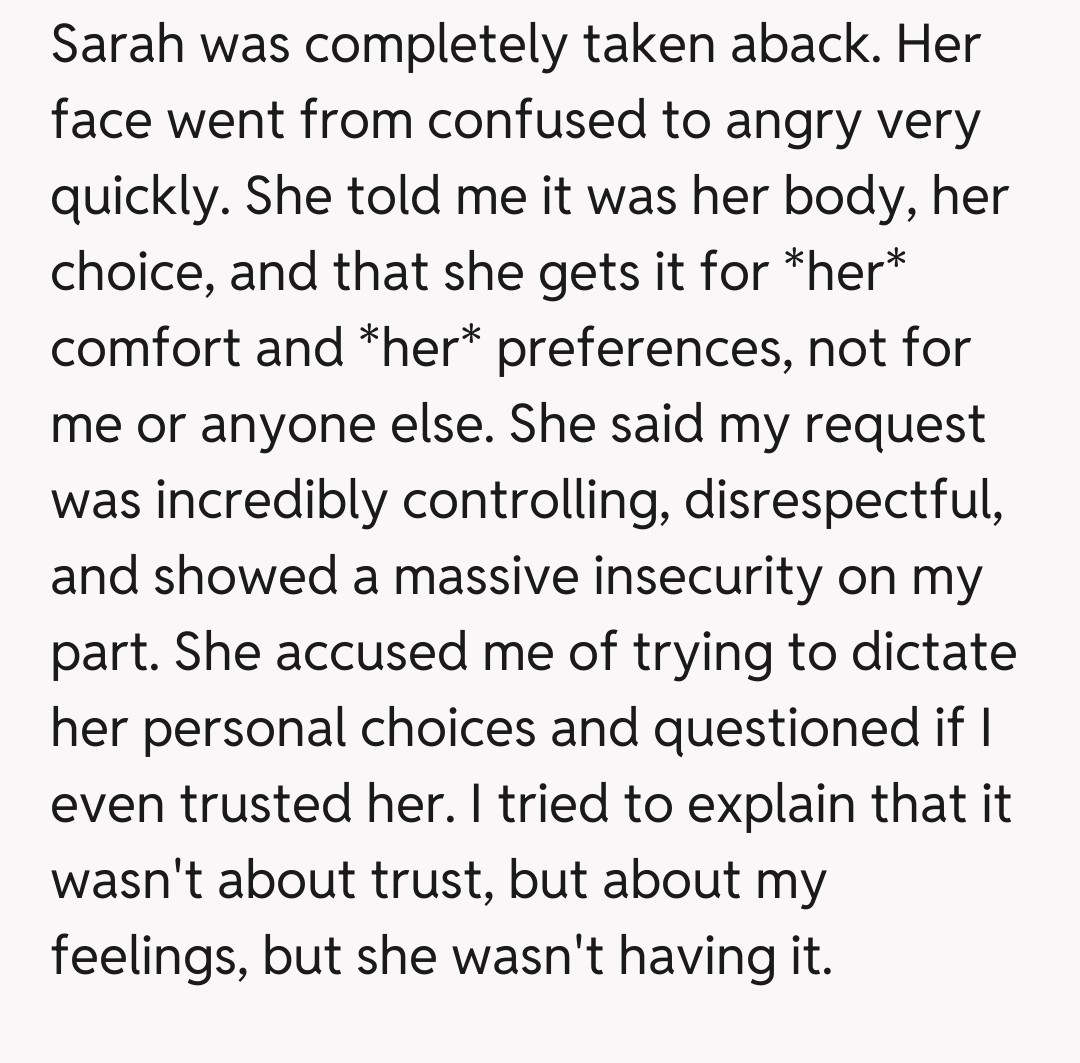
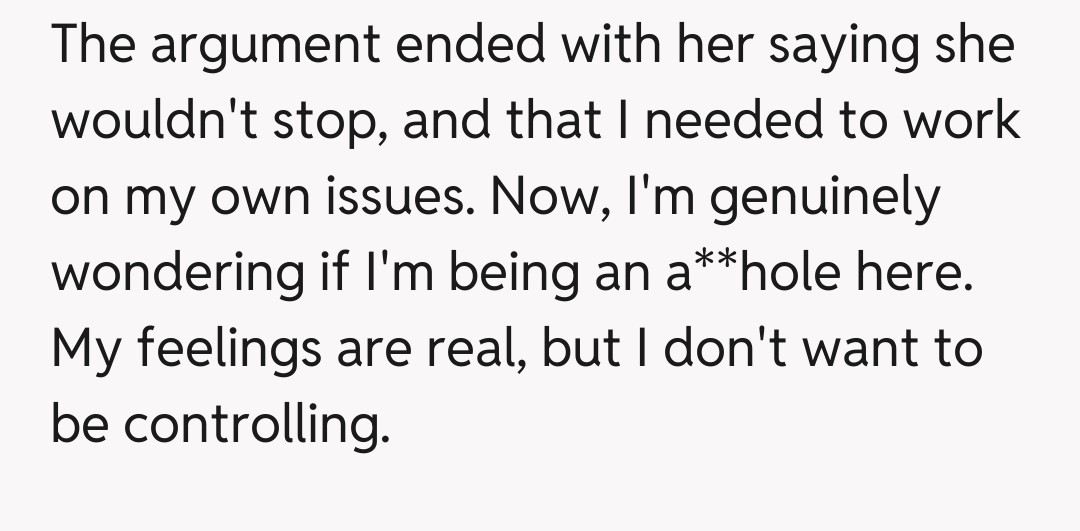
This AITA post presents a classic conflict between individual autonomy and a partner's emotional discomfort. On one hand, the OP's feelings of insecurity are valid. We all experience moments where our own self-esteem affects how we perceive our partner's choices. It's understandable to feel vulnerable, especially when interpretations of appearance can trigger internal anxieties about worthiness or fidelity.
However, there's a crucial distinction between having a feeling and making a demand. While the OP is entitled to his emotions, asking his girlfriend to stop a personal grooming practice because it 'feels like it’s for other men' crosses a line into controlling behavior. A person's body and the choices they make about its appearance are fundamentally their own, irrespective of their relationship status.
The idea that a woman's grooming choices are 'for other men' is a problematic societal construct that often places the responsibility for male insecurity onto female behavior. It strips the individual of agency, suggesting their choices aren't for their own comfort, hygiene, or aesthetic preference, but rather a performative act for an external gaze, which is simply unfair and untrue.
Ultimately, this situation highlights a need for the OP to address his own insecurities independently. His girlfriend's grooming isn't the problem; his reaction to it is. Healthy relationships thrive on trust and respect for individual autonomy. Demanding a partner alter their personal choices often erodes those foundations, leading to resentment and a breakdown of communication.
Is he insecure or just controlling? The internet weighs in!
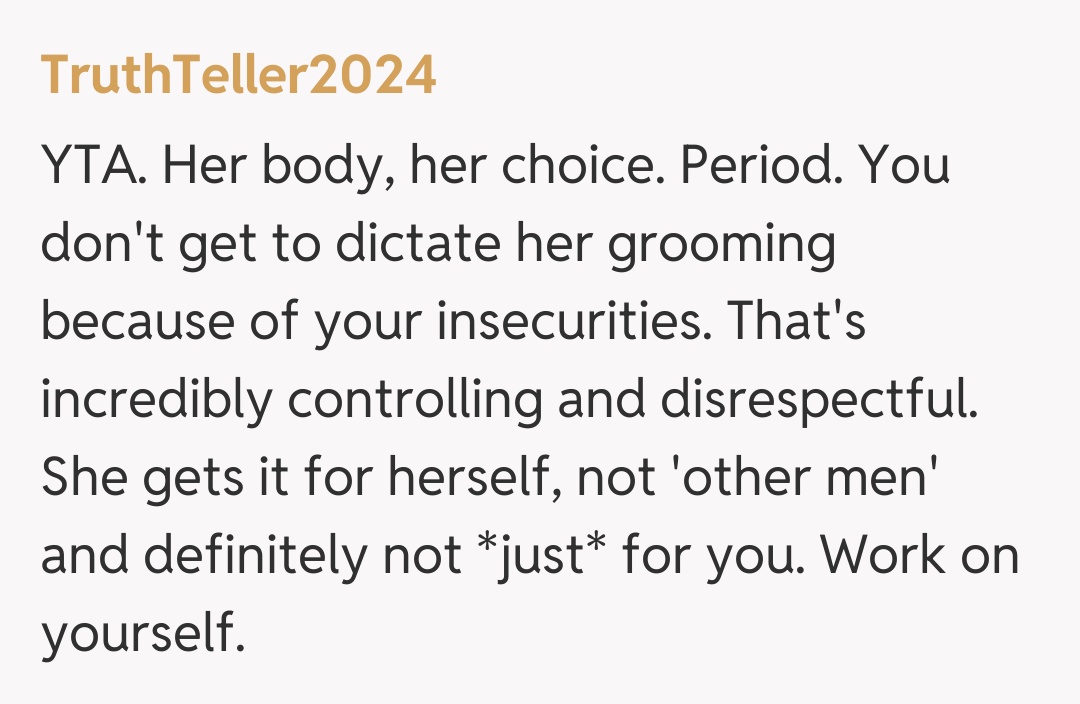
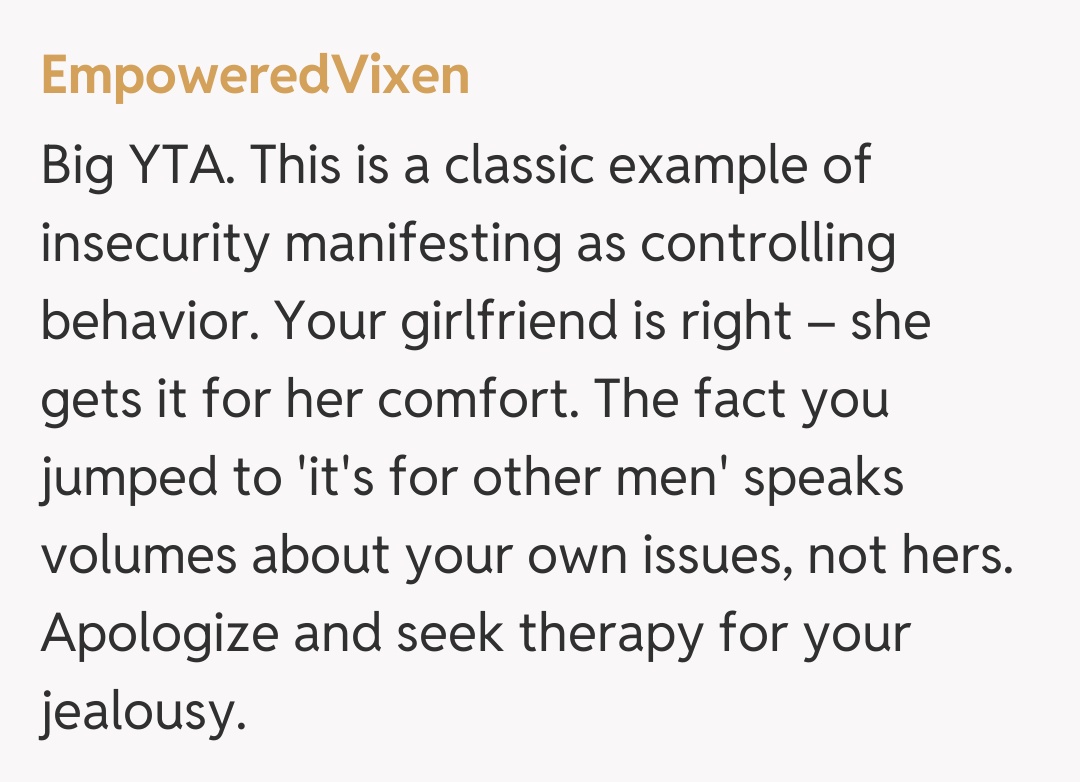
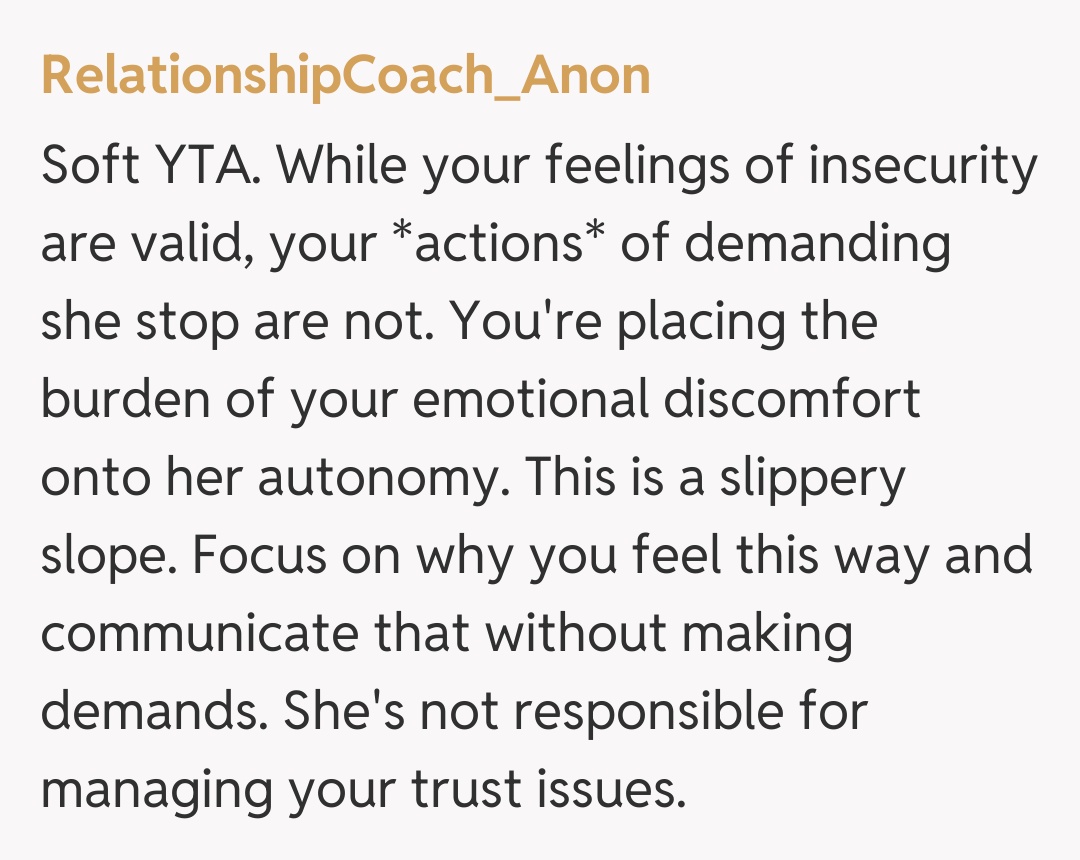
The comments section for this one was, as expected, a blazing fire of opinions, with the vast majority landing firmly in the 'YTA' camp. Readers overwhelmingly sided with the girlfriend, emphasizing the fundamental principle of body autonomy. Many pointed out that a woman's grooming choices are for herself and her comfort, not to appease a partner's insecurities or an imagined male audience.
Interestingly, while many acknowledged that the OP's feelings of insecurity might be 'real,' they were quick to differentiate between having an emotion and acting on it in a controlling way. Commenters suggested that the OP needs to confront and resolve his own self-esteem issues rather than attempting to police his girlfriend's body. The consensus was clear: telling a partner what they can or cannot do with their body is a major red flag.
This story serves as a stark reminder that while feelings are valid, how we act upon them in a relationship truly matters. Personal grooming, like many other individual choices, falls squarely under the umbrella of body autonomy. A healthy partnership thrives on mutual respect and trust, not on one partner dictating the other's personal decisions. The core lesson here is to address our own insecurities and communicate them constructively, rather than attempting to control or change our partner's authentic self. True intimacy comes from accepting and celebrating each other's independence.